Photo Art
25th May 2026
Someone once said, “I like photographs that look like art and art that looks like photographs.” I’m not entirely sure about the latter but I definitely enjoy photos that resemble art.
Achieving a painterly photograph usually requires software manipulation. For example, there are many apps that automatically convert photos into art or some that use the photo as a base for painting with simulated art brushes. AI-generated art is also included in auto-conversion, altering photos with prompts or commands. I find this fascinating but haven’t yet convinced myself it’s part of my artwork. Perhaps I’ll revisit some saved examples and share them in future posts.
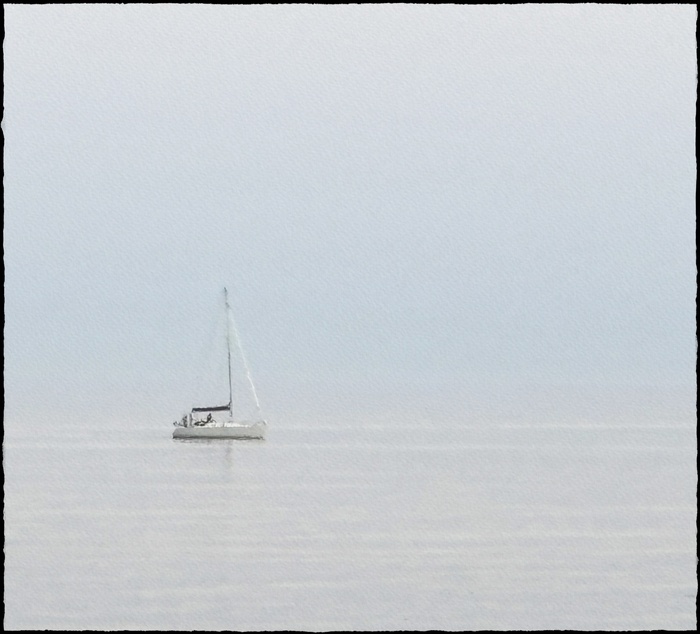
Painterly photographs that don’t require additional software manipulation are those taken by the camera. For instance, filters can be placed in front of the lens to diffuse light or, in this case, I use what might be described as the flaws of digital zoom.
At the extreme of digital zoom, the image pixelates and in-camera software applies sharpening. Depending on the subject, this can smudge fine details or create broken edges, giving a ‘watercolour effect’.
This particular image was taken with my iPhone in low light at maximum digital zoom. I’ve slightly lightened it and added a watercolour paper texture in the background using Rebelle 8.
While I keep photo-art separate from my traditional art in the galleries on this site, I’m happy to incorporate both into this blog. More photo-art can been seen here
Achieving a painterly photograph usually requires software manipulation. For example, there are many apps that automatically convert photos into art or some that use the photo as a base for painting with simulated art brushes. AI-generated art is also included in auto-conversion, altering photos with prompts or commands. I find this fascinating but haven’t yet convinced myself it’s part of my artwork. Perhaps I’ll revisit some saved examples and share them in future posts.
Painterly photographs that don’t require additional software manipulation are those taken by the camera. For instance, filters can be placed in front of the lens to diffuse light or, in this case, I use what might be described as the flaws of digital zoom.
At the extreme of digital zoom, the image pixelates and in-camera software applies sharpening. Depending on the subject, this can smudge fine details or create broken edges, giving a ‘watercolour effect’.
This particular image was taken with my iPhone in low light at maximum digital zoom. I’ve slightly lightened it and added a watercolour paper texture in the background using Rebelle 8.
While I keep photo-art separate from my traditional art in the galleries on this site, I’m happy to incorporate both into this blog. More photo-art can been seen here